
Choosing Liquid Screed Over Traditional Sand & Cement
Refurbishing an ageing concrete floor or preparing a new sub‑base demands a screed that delivers strength, accuracy, and long‑term performance. While traditional sand and cement screeds have been used for decades, modern liquid screed has quickly become the preferred choice for builders, developers, and homeowners across the West Midlands.
Liquid screed offers superior speed, efficiency, and thermal performance — especially when paired with underfloor heating. Here’s why more projects are moving away from traditional screed and choosing liquid as the smarter, more reliable solution.
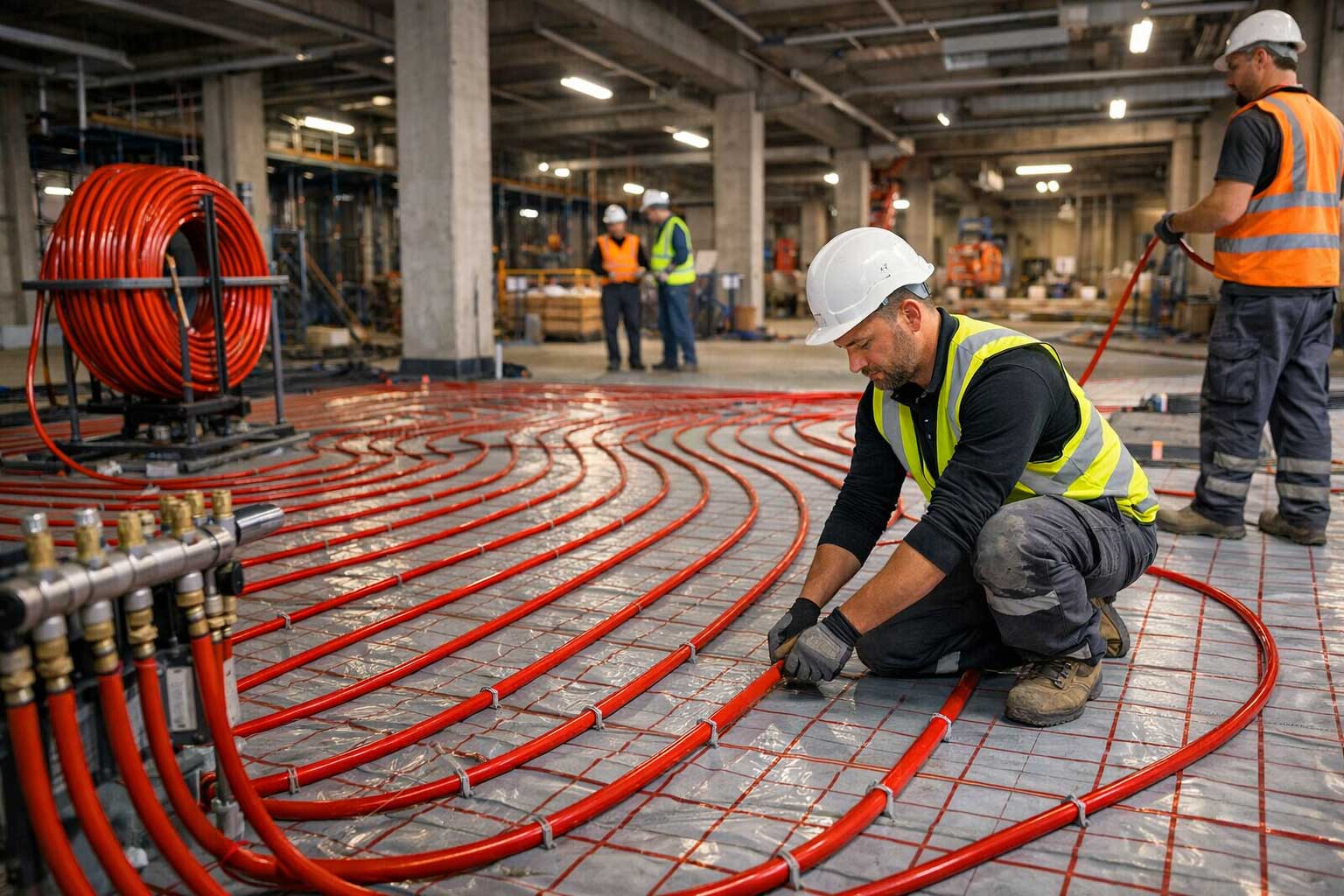
Faster Drying & Earlier Access
It’s a common misconception that traditional screed dries faster because it contains less water. In reality, liquid screed reaches walk‑on strength far sooner.
Liquid screed: walkable in 24–48 hours
Traditional screed: requires 7 days before foot traffic
Both products dry at roughly 1mm per day, but liquid screed’s lower density allows moisture to evaporate more efficiently, speeding up the early stages of the programme.
For projects where time is critical, advanced formulations such as Gyvlon Eco FD and Longfloor Integracure offer even faster drying times — ideal for commercial schedules and tight build programmes.
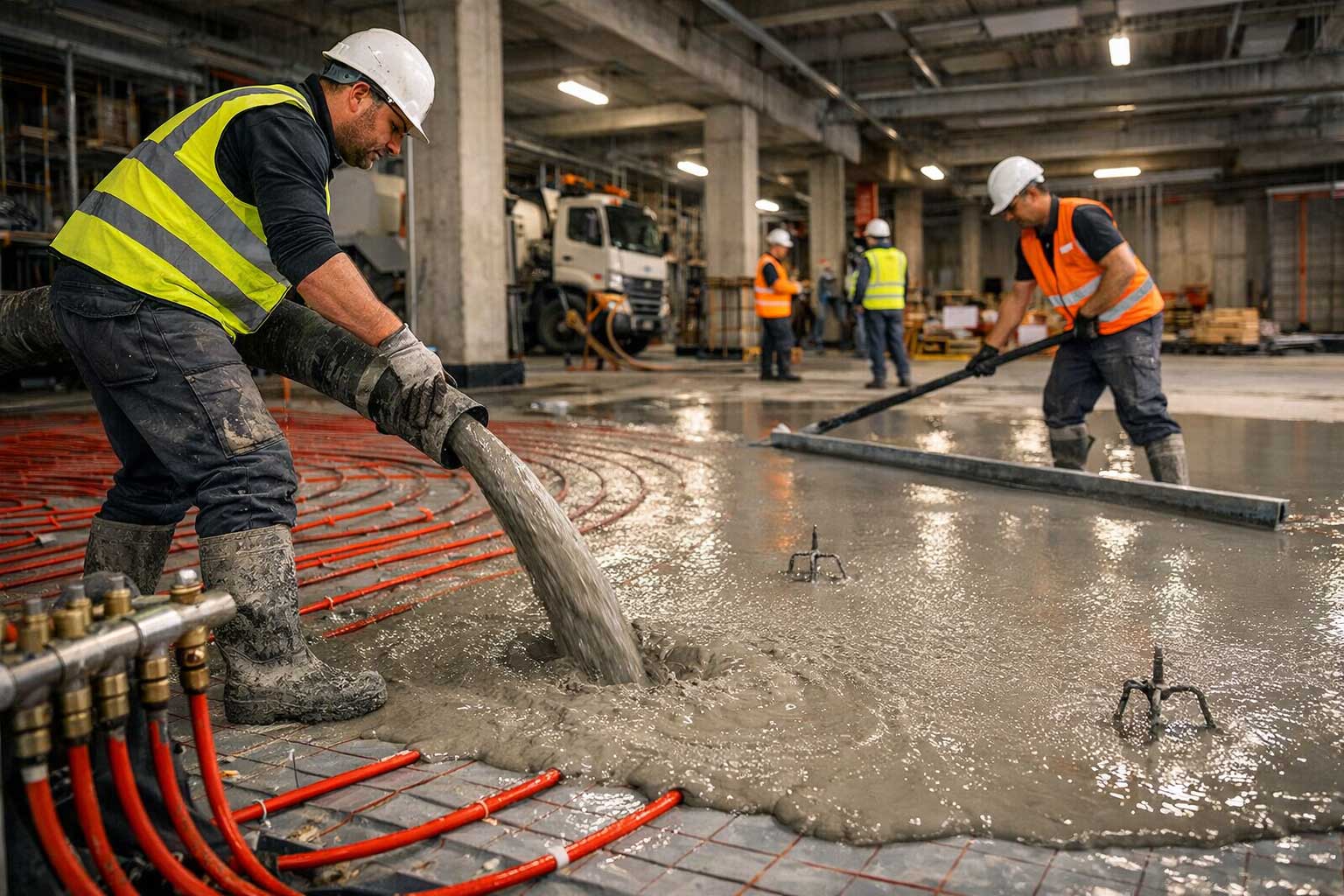
Quicker, Cleaner, More Efficient Installation
Liquid screed dramatically reduces installation time compared to traditional sand and cement.
1,000–2,000m² can be poured in a single day
Self‑levelling and self‑compacting
Only requires light dappling to remove air pockets
Traditional screed, by comparison, typically achieves 100–200m² per day and requires significantly more labour, manual compaction, and finishing.
For large developments, multi‑plot sites, or projects with challenging access, liquid screed provides a faster, cleaner, and more consistent installation.